
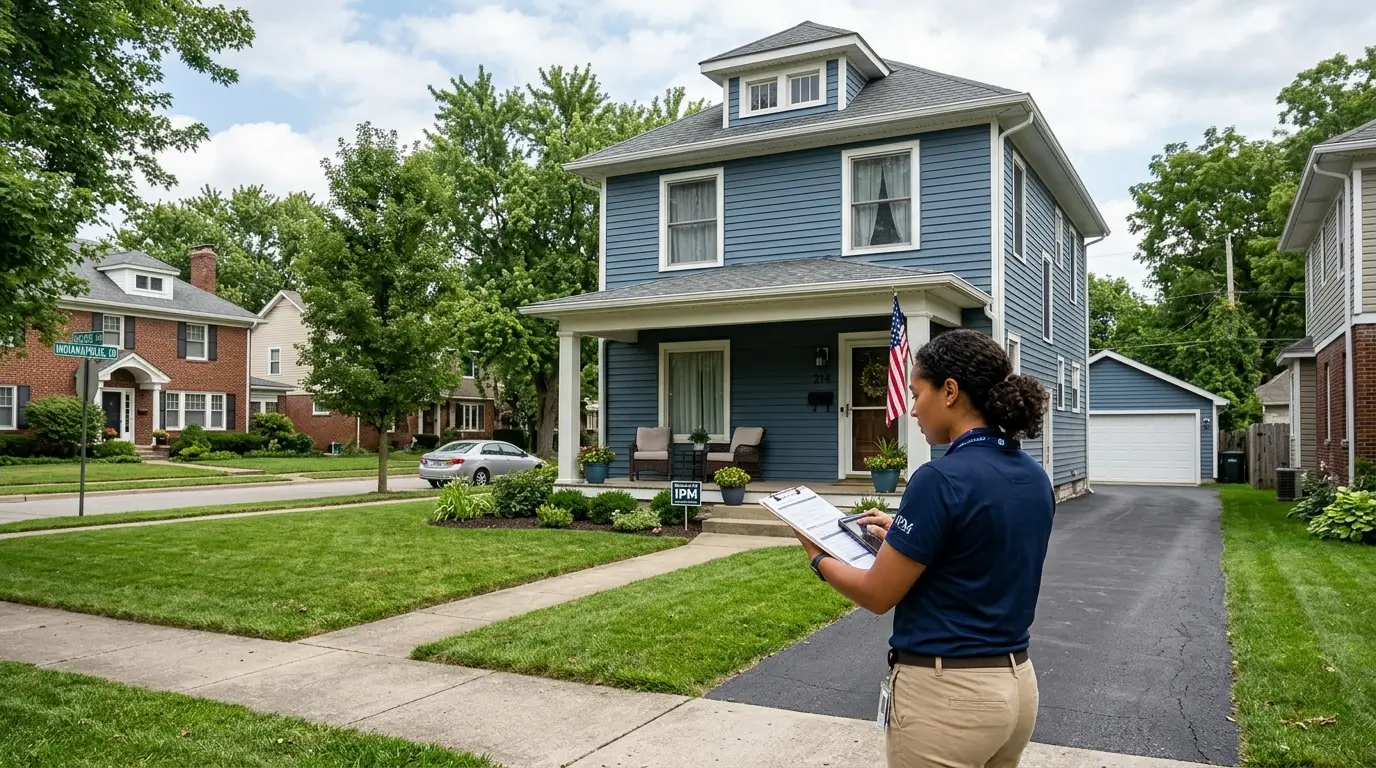
Ask a few landlords around Indianapolis whether they have to register their rentals with the city and you’ll get a few different answers, which makes sense, because the answer depends on exactly where the property sits. Indianapolis has required landlord registration since 2015, but the rule stops at the Marion County line, and it has carve-outs inside it. For owners with properties across the metro, which side of the line each address falls on is the whole question.
Key Takeaways
Chapter 851 of Indianapolis’s city code requires owners and landlords of rental units in the city to register with the Department of Business and Neighborhood Services, whether the unit is occupied or only advertised for rent.
Registration asks for owner contact information, an Indiana-resident manager, an agent for service, parcel numbers, unit counts, and two affirmations about code violations and delinquent property taxes.
Rental properties in the excluded cities of Beech Grove, Lawrence, Southport, and Speedway are exempt, and suburbs outside Marion County such as Carmel, Fishers, and Greenwood are separate jurisdictions.
The fee is $5, which matches the cap Indiana law places on local registration fees, and one fee covers units registered together.
Failing to register is subject to a civil penalty for each rental unit or rental unit community under the city code.
What Chapter 851 Requires
The Indianapolis Landlord Registration Program is established by Chapter 851 of the city’s code of ordinances. It requires all owners or landlords of rental units within the city to register with the Department of Business and Neighborhood Services, and the ordinance is explicit that this covers units that are occupied, units offered or advertised for rent, and rental units offered with an option to buy through seller financing, such as rent-to-own.
Registration, required since January 1, 2015, is completed online through the department’s Citizen Access portal. According to the city’s program handout, either the owner or a designated property management company can complete the form, and applicants enter the parcel number rather than the street address.
What You Have to Provide
The ordinance and the city’s handout spell out the information required. That includes the owner’s name, telephone number, and address. It also includes the name and contact details of a person residing in Indiana who is authorized to manage the rental unit, and a person authorized to act as the owner’s agent for service of process and for receiving notices and demands, as Indiana Code 32-31-3-18 provides. You’ll also list the parcel number and the number of rental units on each parcel.
Two affirmations deserve a closer look. The owner must affirm that the rental units and the real property they sit on, along with any other rental property the owner owns or has registered in Marion County, are not subject to any unremediated citation for violating state or local codes. The owner must also affirm that there is no more than one delinquent payment of real property taxes, assessments, or penalties on the property or on any other rental property the owner holds in Marion County, aside from payments under appeal or in bankruptcy. Because both reach the rest of the owner’s Marion County holdings, an open citation or a second late tax payment on one building affects what you can truthfully affirm for all of them.
Our maintenance program, with routine inspections and documented move-in and move-out conditions, is built to keep small issues from becoming citations.
The $5 Fee and the State Law Behind It
The program fee is $5, according to the city’s handout, and state law explains why. Indiana Code 36-1-20-5 allows local governments to run rental registration programs but caps the annual registration fee at $5, and it lets them require updated registration information within 30 days after a change of ownership.
Under the Indianapolis ordinance, one fee covers all rental units in a rental unit community, while units that aren’t part of a community need a separate fee for each parcel unless they’re registered at the same time. The handout adds that an owner registering several properties together pays a single $5 fee. For multifamily and portfolio owners, the practical takeaway is to register everything in one sitting, and to build an ownership-change step into acquisition and sale checklists so updated information gets filed on time.
Where Chapter 851 Stops
The city’s handout is clear that rental properties in the excluded cities of Beech Grove, Lawrence, Southport, and Speedway are exempt. Beyond Marion County, the ordinance doesn’t reach at all. Carmel, Fishers, Westfield, Noblesville, Zionsville, Greenwood, Franklin, and the other suburbs in our suburb-by-suburb investment breakdown are separate municipalities, so Chapter 851 doesn’t apply to them. Inside Marion County, owners in places like Pike Township and Franklin Township should assume the ordinance applies unless the property sits in one of the four excluded cities.
That is not the same as saying nothing applies elsewhere. Indiana law lets any local government create a registration program, and some do. The City of Shelbyville, for example, requires landlords to register their rental units with its Planning and Building Department, and Marion, Indiana requires residential rental properties to be registered with its Building Department. Before assuming a suburban property is exempt from everything, check with that city or town.
What Happens If You Don’t Register
The ordinance treats failure to register as a violation subject to a civil penalty for each rental unit or rental unit community, in an amount set elsewhere in the city code, so confirm the current figure before quoting one to an owner. The city’s handout also notes that the registration list is public through the Citizen Access portal, which makes a missing registration easy to spot.
A Practical Checklist for Owners
Start by sorting every address into three groups: inside Indianapolis, inside an excluded city, and outside Marion County. For the first group, gather parcel numbers and unit counts, name your Indiana-based manager and agent for service, and check for open code citations and delinquent taxes before filing, since you’ll be affirming both. Register all parcels together, calendar the annual renewal, and file updates promptly after any ownership change. For the third group, contact the municipality.
FAQ
Do I have to register a rental in Indianapolis if it’s vacant?
Yes. The ordinance covers rental units that are occupied as well as units offered or advertised for rent.
Does Chapter 851 apply to Carmel, Fishers, or Greenwood?
No. Those are separate municipalities outside Marion County, so the Indianapolis ordinance doesn’t reach them, but each may have its own local requirements worth checking.
How much does registration cost?
The fee is $5, which matches the cap Indiana law sets for local registration fees, and owners registering several properties together pay a single fee.
Can my property manager register for me?
Yes. The city’s handout says the owner or a designated property management company can complete the registration form.
Know Which Side of the Line Each Property Sits On
Indianapolis’s landlord registry is simple to comply with and easy to get wrong, mostly because owners assume it applies everywhere or nowhere. Sorting each address by jurisdiction takes most of the work out of it.
If you’d rather not track which rules apply to which address, our Indianapolis property management team handles the compliance side of managing rentals across the metro, so every property is run under the rules that actually apply to it.